Maori discovers the hidden sketchbook
Even If This Love Disappears From the World TonightMaori discovers the hidden sketchbook after recovering from anterograde amnesia, and its portraits of an unknown boy provoke a bodily recognition that her conscious memory cannot explain. The discovery turns an ordinary room-cleaning into the first clear clue that her lost years contained a love she had neither read about nor remembered: Tooru Kamiya, whose image has survived in the drawings even when his name and story were absent from the records available to her.
The hidden book and its first effect
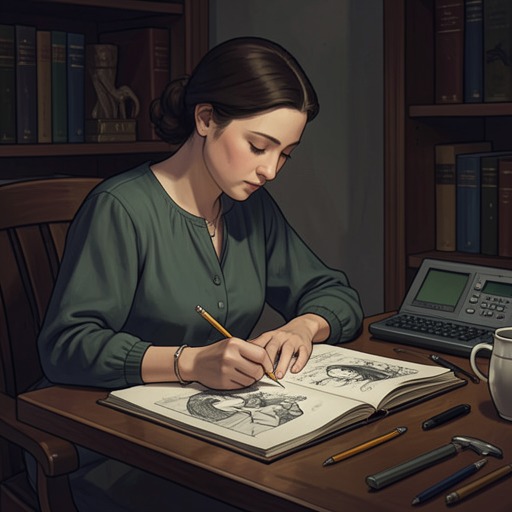
During a study break, Maori starts tidying her room; the task grows into a major cleaning spree, and she finds an unfamiliar sketchbook behind her bookshelf. The location makes the object feel deliberately put away rather than merely misplaced. She takes it to the veranda, dusts it off, and opens it, expecting no more than an unexplained possession from her past.
Instead, the pages show a boy she does not recognize. At the sight of him, a stabbing pain crosses her chest and her heart pounds. Maori shuts the book, but the physical reaction persists: she hears her heartbeat thumping as though it is urgently trying to communicate something that her conscious mind cannot retrieve. The gap between recognition in her body and ignorance in her thoughts gives the discovery its force. She can identify the drawings as her own style and infer that her past self made them during the period of amnesia, yet she cannot supply the memory that would explain why.
A past deliberately out of view
Maori wonders why she hid the sketchbook behind the bookshelf and concludes that she must not have wanted anyone else to see its contents. She tentatively connects that concealment to the possibility that the drawings depict someone she liked. The idea seems absurd to her: she assumes she could not have fallen for anyone while amnesiac, and, now that she has recovered, she feels no interest in dating. The boy in the book therefore unsettles not only her memory but her assumptions about the emotional life she lived while unable to remember each day.
The portraits deepen the mystery through their repeated angles. The boy looks somewhat weak but kind, and many drawings show him looking to the side with a vague or shy smile; none faces the viewer directly. Looking again makes Maori’s heart pound. The images are numerous enough to suggest sustained attention, but they offer neither a name nor a straightforward account. Their reserve contrasts with the intensity of her response: she has no recollection to narrate, only an accumulating set of visual and bodily clues.
Records, omissions, and the search for a name
Maori has read her journals many times, yet she does not think the boy is mentioned in them. That absence matters because written records have been her practical means of orienting herself after years in which sleep erased the previous day’s memories. During the amnesiac period she tried to preserve important information in a binder and more personal daily experience in a journal; the journal’s entries and summaries recorded her life as it unfolded. But the unknown boy is not readily available through either form. The sketchbook preserves something the written account, as Maori knows it, does not disclose.
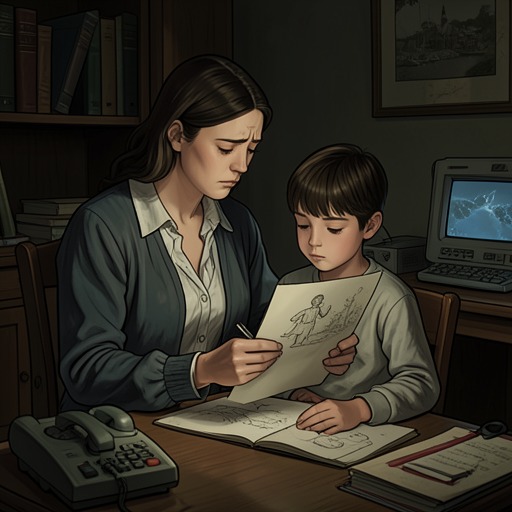
She considers asking her mother whether she knows who the boy is, but feels embarrassed. She also thinks of photographing a drawing and sending it to Izumi Wataya, then decides to show her in person because they are already due to meet that afternoon. The decision does not solve the mystery, but it changes the sketchbook from a private, inexplicable discovery into something Maori is preparing to share. She returns to looking at the boy, held between the certainty that the pictures came from her own hand and the uncertainty of what that hand once knew.
The sketchbook within Maori’s memory history
The discovery gains further meaning from the conditions that shaped Maori’s earlier life. Her amnesia began after an accident in her second year of high school: each night, rather than storing the day’s memories, her brain erased them. For roughly three years she relied on diaries, notes, and the help of people around her to maintain continuity. Her family and school knew about her condition, while classmates were not told, in part because spreading the information could expose her to unwanted attention and stress. She kept attending class and ultimately graduated, despite submitting blank homework and sitting tests whose results could not change her circumstances.
The sketchbook belongs to this same period, but it records a different kind of continuity. Maori had stopped making art when she entered high school to concentrate on studying, then began drawing again during summer vacation while she was amnesiac. She later learned that procedural memory—the bodily, practiced capacity involved in activities such as drawing—could remain available even when autobiographical memories failed. The sketchbook thus bears witness both to a skill returning through practice and to an emotional attachment that Maori cannot yet consciously name. Her hand retained a history that her daily-reset memory could not tell her.
From concealed image to recovered relationship
The hidden sketchbook is an early stage in the return of a larger story. During the later removal of Tooru from Maori’s records, Izumi and Tooru’s sister Keiko Nishikawa replace her paper notes and transfer edited digital records to her computer. On the back of one reminder, Izumi finds Maori’s own instruction to remember Tooru even if she recovered. The concealed message suggests that Maori had anticipated a future in which she might regain memory and wanted the important person in her life to remain discoverable. The intervention to erase him from her records therefore meets a contrary trace placed there by Maori herself.
The sketchbook’s significance becomes explicit when Maori’s memory of Tooru returns. Her later drawings show him as she remembers him, unlike the earlier portraits that repeatedly turn him aside or let him smile shyly. The image first encountered behind the bookshelf is therefore not simply an unidentified likeness: it is evidence that love and attention had persisted in a form Maori could encounter before she could explain it. The discovery links her recovery to the novel’s recurring tension between records that can be altered and traces that survive their alteration—through bodily response, practiced drawing, and images made by a past self.